The UK Pony Comic
"If wishes were wings, things would be able to fly..."
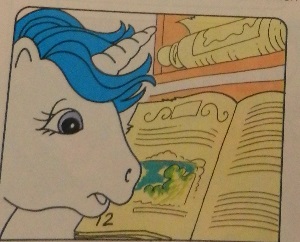
Majesty consults the "Book of Horrors"
UK Pony Comic, 1986
| search engine by freefind | advanced |
The My Little Pony Comic began in 1985, it ended in
1993. My Little Pony and Friends, which also featured
stories for the Moondreamers, Glo Friends and Potato Head Kids,
began in 1987 and ended in 1994. Unlike the animation, almost
every single pony sold in the UK appeared in the comic in some
form - along with a few extras in the early years where Hasbro
were still considering who to release and who to hold back.
These stories were interspersed with photo adverts, character
profile pages, craft activities, nature information, games,
calendar pages, posters and club related messages - most of
which were overseen by one or other pony, depending on the
theme, season or story that had inspired it.
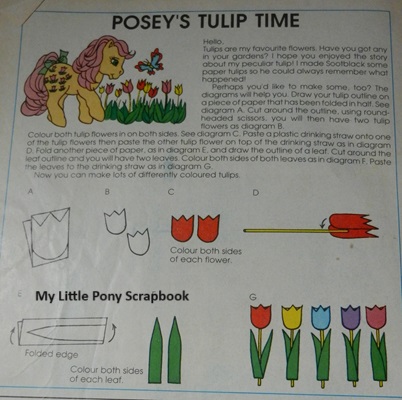
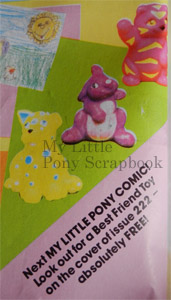
Many also came with free gifts, which could be anything from
actual pony accessories to booklets introducing a new set. Merry Treat's
comb, a newborn white bottle, a Best Friends Baby Pet, a rattle
and a Hairdo
Pony comb were all freebies given away by the My Little Pony
comic.
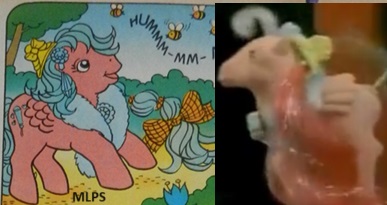
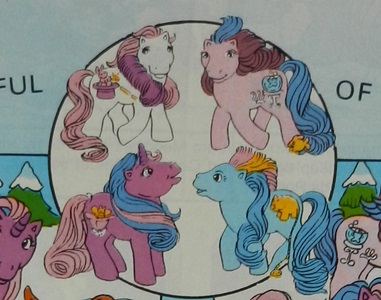
These ponies were often drawn with features recogniseable from
prototype ponies or promotional material, indicating that the
comic artists were working from early Hasbro images for each
set.
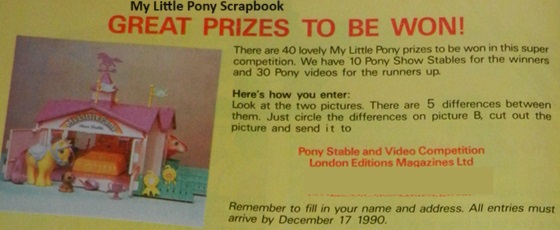
New releases would be introduced into the comic at relevant
intervals, but the bulk would usually appear around the new year
point, when the majority of new characters were unveiled. Comic
offers or competitions to win ponies from newly released sets
were regular occurrences.
The comic used UK pony names and set names, but drew
their character information both from UK backcards, and, with
some earlier ponies, US backcard stories. Some early UK release
ponies had characters borrowed or amended from US release
package stories, because they lacked characters of their own.
As with the animation, the comic was designed to sell ponies.
It just did so more consistently.
In the animation, the ponies lived in "Dream Valley", which was
a part of Ponyland. In the comics, there was never really a
focus on "Dream Valley". The word "Ponyland" as a collective was
more common. "Ponyland" was also not the sole country included
in the comic stories. There were numerous other lands, islands,
and countries with inhabitants of various species, animal,
humanoid, insectoid or fantasy, with which the ponies
interacted.
Other non-pony characters also lived within "Ponyland" - not
just the attendants and friends who were on sale with ponies,
such as Spike or Brandy, but also regular characters such as the
Weather Witch, Junk-It, Wizard Wantall, The Flower Lady. The
CopyCats, Greenie Grumbleweed, the Know-All Gnomes,
String-Along, the Man in the Moon, The Sandman, Question-Mark,
Magician Muddle, Miranda the Mermaid and so on. Certain ponies
also had particular 'friends', although these did not become
toys - such as Sally Starfish, who was a friend of Braided
Beauty's, Untidy Ted who was a pal of Shaggy, Mr
Caterpillar, who was friends with Wiggles, and Solomon the Snail, who
was friends with Squirmy.
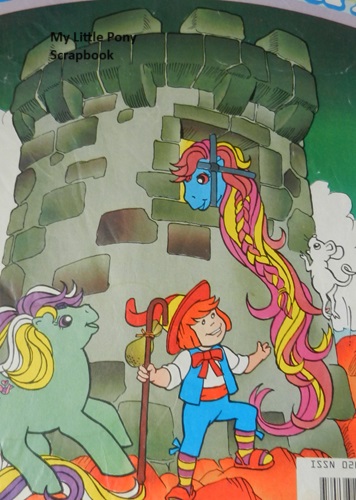
Fairytale and nursery rhyme characters, such as Little Boy Blue,
also made an appearance, and at least one comic story mimicked
the tale of Rapunzel.
There were also characters who had particular magical
significance, such as the Autumn Princess, who ended Summer, and
the Stone Giant, whose song would foretell trouble approaching.
Fairies, pixies, elves of all shapes and sizes populated the
stories alongside all manner of birds and beasts, and even
sunbeams or stars.
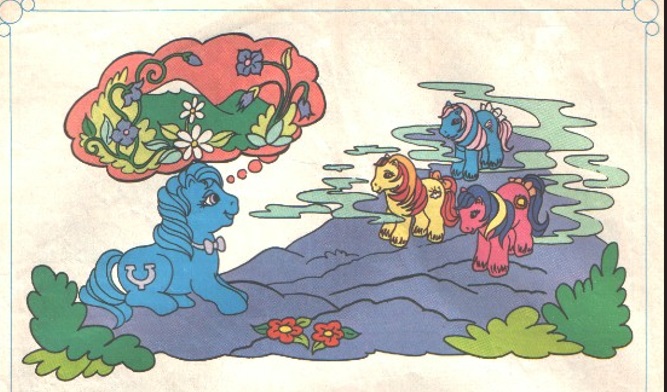
The ponies themselves also lived in diverse locations around
Ponyland. Some lived in mountains - the Mountain Boys
in Misty Mountain, and the Rainbow Curl and Rainbow
Babies lived in Rainbow Mountain.
The Tropical
Ponies lived in the Tropical Isle, while the Baby Sea Ponies
lived in the sea under the guidance of King Neptune. The Cookery Ponies
weirdly lived in a floating, scented pink cloud, from which they
would occasionally descend. This was alongside more standard
locations such as "Flutter Valley" and the playset-driven Dream Castle,
Lullabye Nursery,
Grooming
Parlour(s), the Waterfall and Paradise
Estate. Ponies also regularly visited places like the
Silver Stream, Weird Wood, and even the moon.
With an essentially rolling door of characters coming in and
out depending on what was in store, there were new locations,
sets and adventures included along the way. The introduction of
the Adventure
Boys, for example, added rail, road and sea travel, and
these were often used in broader stories. Some ponies would be
in the comic only for the duration of a year or two, others
would be regular returns. Some of the most common and persistent
characters in the pony comic were Majesty, her dragon Spike, and
her ward, Baby
Lucky - but there was no real overall 'core cast'. Being
withdrawn from stores did not automatically mean being
eliminated from comic appearances, however. Some ponies
reappeared in much later editions to participate in stories
matching particular themes.
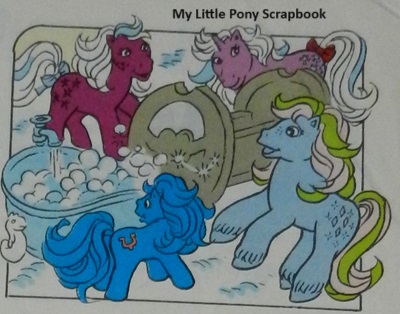
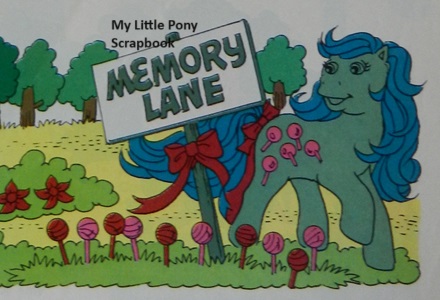
Others moved to a new location called "Memory Lane", giving
advice to later pony visitors.
Although Megan
had a role in the comic, she only really appeared occasionally,
and mostly during 1986-7, when she was on sale. After this she
had the occasional cameo, or was relegated to running the
letters page.
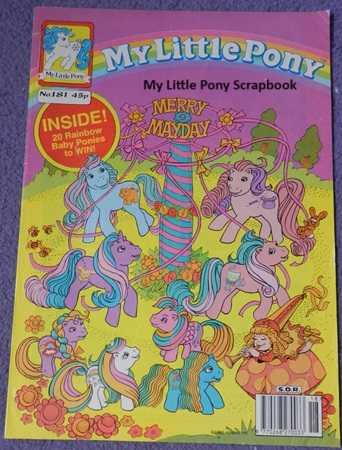
Real world festivals were marked in the comic, albeit sometimes
under other names. The ponies celebrated Christmas and New Year,
and, until the introduction of a formal Christmas pony in Merry Treat,
the ponies took it turns to play at being pony santa. Other
celebrations included Valentines Day, Lucky Clover Day (St
Patrick's Day), Pancake Day, Easter, May Day, Harvest Festival
and Guy Fawkes Night (Fizziwhizz Night).
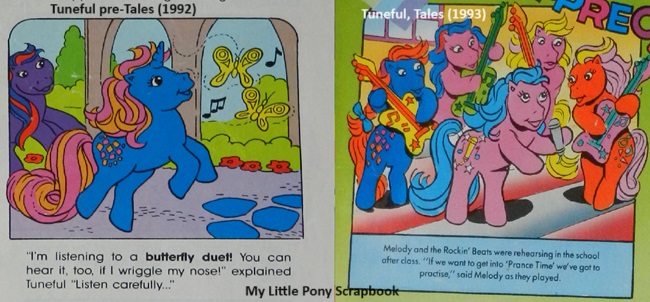
The last year or so of the My Little Pony comic focused on the
world of the Tales ponies, or Seven Characters. This meant that
some characters - like the Rockin' Beats and Glowing Magic
Ponies - were reintroduced in a new context, having
already been introduced prior to the Tales switch. In the older
comics, they appeared with magic abilities, but in the later
comics, Tuneful lost
her horn, and magic was no longer on the table. The Tales
stories also brought more 'invented' ponies into the narrative,
and not all ponies on sale in 1993-4 were depicted in these
comics.
Although there are still some people who insist that My Little
Pony Tales was actually G2, the reality is that it was a part of
Generation 1. To any kid growing up in the 1990s, there was no
difference between these new ponies and the ones that came
before. The shift in the narrative style from magical to slice
of life was a significant one, but, at the same time, UK kids
had grown up seeing the cast of the comic change and stories
altering to reflect the themes of those new characters.
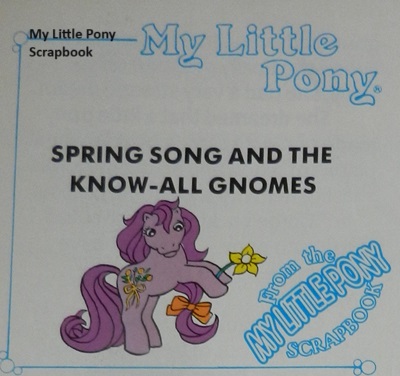
Letters to and about older ponies appeared still on letter
pages, and, most importantly, every My Little Pony Tales
comic featured an older story, featuring older
characters, in reprint, termed a story from the "My Little
Pony Scrapbook." Which is where this site gets its name!
My Little Pony is often discussed as a toy for girls - which
is, of course, the core target audience. But the idea that
Generation 1 was exclusively enjoyed by girls - and that
Generation 4 was the first generation to appeal to boys - is
unfounded. In fact, through the years the comic was active, the
letters pages often included letters and pictures from boys as
well as girls.
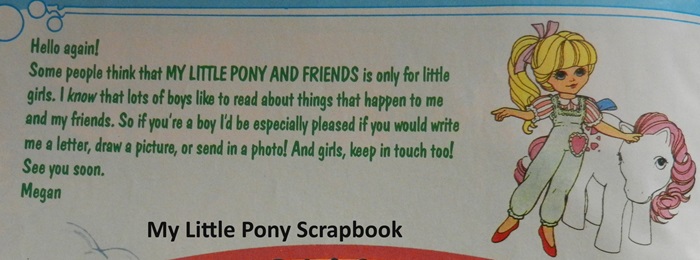
This remark, printed in My Little Pony & Friends #27,
sums up Hasbro - and the comic's - perspective on this
phenomenon during the eighties and nineties. My Little Pony was
a girl-targeted toy, but enjoying My Little Pony was ok for boys
too.
Perhaps we can understand this most given that Hasbro were
predominately a toy company making toys aimed at boys, and My
Little Pony was a lot of an experiment. It explains why they
might have wanted and encouraged a more diverse fanbase.