The Evolution of My Little Pony
The "Collector" Ponies (Concave Foot Versions)
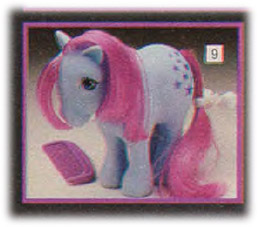
Bluebelle (Argos Catalogue)
Bluebelle (Argos Catalogue)
| search engine by freefind | advanced |
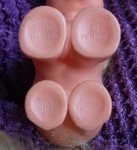
The previous year(s) had brought into being the original six My Little Pony characters, but there were some major problems with how these ponies were put together. Their poses lent themselves to toppling over forward, and a very heavy washer was needed to stabilise them (with minimal success). In 1983, Hasbro modified both the mould and the style of hoof, creating the 'concave' hoof style all subsequent mainstream ponies (with hooves) would sport.

The name 'Collector Pony' comes from the frequent mail in offers in North America in later years, where they were referred to in this vein. The original six had a much greater weight and presence in North America because of these mail order reissues - whereas in the United Kingdom, only two of the six would go on to become familiar and popular characters. In North America, at some point in around 1983-4, Hasbro switched to putting concave hoofed ponies on the same cards and selling them in stores. The Mail Order releases - which continued up as late as 1986 - also featured concave hoof versions, with various minor batch differences designed to drive future collectors wild trying to match loose ponies up with release.
In the United Kingdom (unsurprisingly) things were more complicated. Again, anecdotal evidence suggests that some form of carded concave hoof release happened as a natural transition from the Flat Footed ponies, and it is probable this was also imported, with no uniquely UK backcard known to survive. But it was what came after that which makes the UK release more novel.
Two of the set of six - Cotton Candy and Blossom - would go on to become household favourites when they were re-released (globally) as part of the 1984 Earth Pony release. These two characters would also feature heavily in UK stories of the time as well. The other four characters had different releases, some of which were a mite...odd.
The caveat to this is that in terms of store evidence, there is little in the way of UK catalogue or brochure material demonstrating whether releases were exclusive or widespread. Their inclusion in the Argos catalogue - the existance of which is of huge help in pinpointing sales - does not necessarily mean that they were only sold via this method. It is probable that much evidence has been lost to history.