Sweetberry Ponies
1988 (North America), 1990 (UK and Europe)
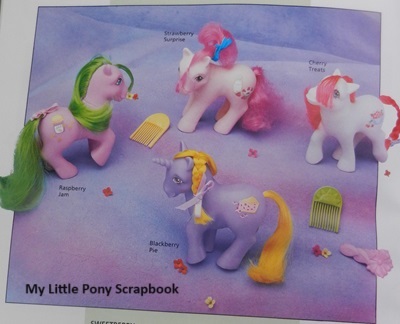
Sweetberry Ponies
Hasbro Catalogue, UK 1990
Sweetberry Ponies
Hasbro Catalogue, UK 1990
| search engine by freefind | advanced |
The Sweetberry Ponies arrived in the UK in 1990, a full two
years after they had first been sold in North America. They were
sold in several countries across Europe during 1990, on the same
style of card as that in the UK, with dark pink borders down the
sides and Mainsail
under the rainbow.
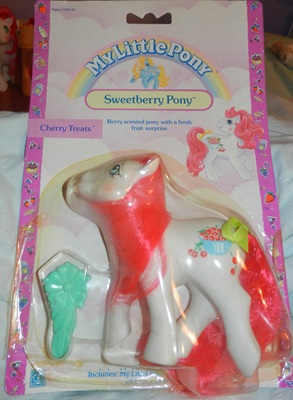
This same style of card featured across Europe, even in Italy,
which now had cards in keeping with other areas of the
continent. The set names, pony names and stories were translated
for the regions they were sold in.
The European release, as indicated by the catalogue image at
the top of the page, comprised four ponies. Six had originally
been sold in North America - Blueberry Baskets, and
Cranberry Muffins, were not included in the European and UK
assortment. There was also one name change in the English
language release - "Boysenberry Pie" was changed to
Blackberry Pie in the UK.
The decision to make the set smaller seems a conscious
marketing decision instead. Releasing only four ponies from a
full set of six in the UK and Europe (or releasing sets of four
overall) was increasingly common as the 1990s rolled around. The
other scented set for this year, the Candy Cane Ponies, also featured a
four-from-six release model. Unlike the Candy Cane ponies,
however, the additional two characters did not make an
appearance in the UK via a Woolworths exclusive import offer.
Another quirk of the Sweetberry Pony set in Europe is
manufacture. Probably because of the two year delay in releasing
them here, the majority (if not all) European-sold Sweetberry
Ponies are made in China. They also all lack forelocks.
The North American release all have forelocks (except for
Blackberry Pie, who, as a unicorn, did not have one). They are
also predominantly made in Hong Kong, although some have been
found made in China as well. The Chinese ones sold stateside
still have forelocks, however.
The promotional image from the above Hasbro catalogue image
features ponies with forelocks - but it was common during the
1990s for photos in UK or European catalogues to either use
American catalogue images, or be posed with the existing
American release of the set (even if actual production details
differed). For that reason, we cannot use the catalogue images
as a true representation of what was sold here.